
Your Path to a High GRE Score
Experienced GRE Teachers · Structured Curriculum · Personalized GRE Preparation
Latest Articles
Practical GRE study tips, exam strategies, and preparation guides.
How to Practice for the GRE Quantitative Section: High School Level Difficulty, but a 170 is Only the 89th Percentile—Understand the Questions, Familiarize Yourself with Question Types, and Minimize Mistakes
Based on the ETS website, this article clearly explains what the GRE Math section covers, how it is tested, and how to practice: The content covers high school math and statistics, excluding trigonometry and calculus, and is divided into four areas: Arithmetic, Algebra, Geometry, and Data Analysis. The new test format features two math sections with a total of 27 questions (12 questions in 21 minutes and 15 questions in 26 minutes), which are section-level adaptive. It covers the key points for the four question types, how to use the on-screen calculator, official ETS test-taking strategies, and the fact that there is no penalty for wrong answers so you should answer every question. It also provides practice methods: reviewing English terminology, specifically practicing quantitative comparisons, and taking POWERPREP practice tests.
How to Study GRE Vocabulary: Focus on Precision Over Quantity and Practice Using Official Answering Tips
The GRE does not test word definitions directly; instead, it tests whether words are used correctly in context through Text Completion and Sentence Equivalence. ETS officially advises: do not just look for two words with the same meaning among the options. This article explains exactly how well you need to know GRE vocabulary, along with specific strategies for using flashcards, self-testing, spaced repetition, and grouping words by meaning to identify strengths and weaknesses.
How to Score High on the GRE: A Perfect Quant Score Is Only the 89th Percentile; Verbal and Writing Make the Difference
According to official ETS data, a 170 on the GRE Quant is only the 89th percentile, while a 165 on Verbal is already the 95th. This article explains the structure and scoring of the new GRE, why there is no partial credit for Text Completion and Reading Comprehension, and how to practice for Verbal, Quant, and Analytical Writing.
Why Choose Us
What Sets Our GRE Prep Apart
Expert Faculty
Familiar with the GRE test structure and core question types, tailoring preparation focus to students' varying foundations.
Systematic Instruction
Proprietary curriculum covering the three core test sections: Verbal, Quantitative, and Analytical Writing
Targeted Improvement
Identify areas for improvement through practice tests and strengthen skills with targeted practice and detailed feedback.
Ongoing Support
Continuous tracking of prep progress from study planning and phased practice to mock exam reviews
Curriculum
Choose the Right GRE Course for You
GRE Foundation Course
Ideal for Students with No or Limited GRE Background
- 3 Live Sessions per Week
- Homework Grading
- Practice Tests
- Study Group Q&A
GRE Advanced Prep Course
For students aiming for a GRE score of 320 or higher
- 4 Live Sessions per Week
- 1-on-1 Tutoring
- Real Exam Practice
- Personalized Study Plan
Custom 1-on-1 GRE
Personalized study plans focused on your individual goals
- Dedicated Instructors
- Customized Courses
- Flexible Hours
- Continuous Progress Tracking
Evidence-Based Teaching Methods
Initial Diagnostic Assessment
Full-length practice test to accurately assess your current level
Structured GRE Instruction
Step-by-step lessons covering foundational and advanced concepts
GRE Practice Questions
Targeted practice with official GRE questions and test-taking strategies
Practice Tests and Performance Review
Regular practice tests to identify weaknesses and track progress

Our Teaching Team
Experienced instructors providing personalized support for GRE preparation
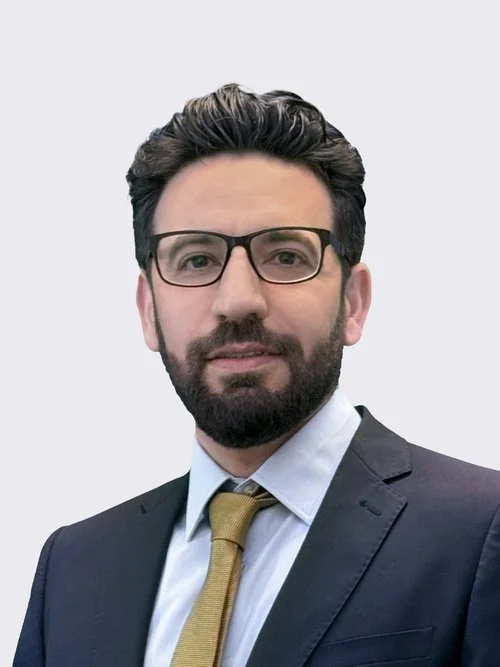
Vahid
Chief English Instructor- •Over 13 years of teaching experience at overseas universities and private schools in Canada and beyond
- •Over 13 years of teaching experience at overseas universities and private schools in Canada and beyond
- •Various ESL courses, Canadian language proficiency levels, CEFR, curriculum development, EAP, essay evaluation, and course development and teaching for SSAT, SAT, IB, IELTS, TOEFL, GRE, CELPIP, and other exams
- •Achieved a perfect score of 9 (out of 9) multiple times in the reading, listening, and speaking sections of the IELTS; formerly a journal editor and published research on the relationship between spatial intelligence and cloze test performance in the 2012 edition of the Journal of English Teaching (EFL)
Mr. Vahid is the Chief English Instructor at Forbest, with extensive teaching and research experience in various ESL programs and over 13 years of teaching experience at overseas universities and private schools in Canada and beyond. Mr. Vahid is highly proficient in Canadian language proficiency levels, language proficiency assessment, CEFR, speaking standards, curriculum development, EAP, and essay evaluation, with a deep understanding of various proficiency assessments. He has not only taught but also participated in the research and design of courses for SSAT, SAT, IB, IELTS, TOEFL, GRE, and CELPIP. Mr. Vahid excels at tailoring courses to each student's level and ability, using various guided teaching methods to help students identify and improve their weaknesses. As a patient and responsible teacher, he not only plans learning strategies for students before class but also adjusts course content in real-time based on their performance. He meticulously prepares or even writes customized after-class exercises and review plans for students of different abilities and levels, helping them consolidate their knowledge after class. He tracks students' progress throughout the course to ensure continuous improvement. Mr. Vahid's courses combine various textbook syllabi with well-known current affairs magazines and news English, utilizing strong grammar categorization teaching to help students easily read different types of articles. His well-organized and fast-paced reading and writing courses help students appreciate the charm of English, while his careful and responsible guidance helps them regain confidence in English writing. His listening and speaking courses, combined with current events and classic movies, immerse students in the English world, stimulating their interest and covering all aspects of listening, speaking, reading, and writing. At the same time, Mr. Vahid places great emphasis on rigorous grammar and vocabulary accumulation; his essential grammar summaries and vocabulary and root word courses are highly acclaimed, helping students sort out grammar structures and expand their vocabulary. As a Master's graduate in English Teaching, to better understand the types of English tests taken by second-language students, Mr. Vahid has taken IELTS (General and Academic), TOEFL (iBT), and GRE multiple times, achieving a perfect score of 9 (out of 9) several times in the reading, listening, and speaking sections of the IELTS. Mr. Vahid has also served as a journal editor and published numerous academic articles on education. His most famous research—a study on the relationship between spatial intelligence levels and performance in analyzing and perceiving cloze tests—was published in the 2012 edition of the Journal of English Teaching (EFL). Mr. Vahid's courses are consistently recognized and loved by his students.
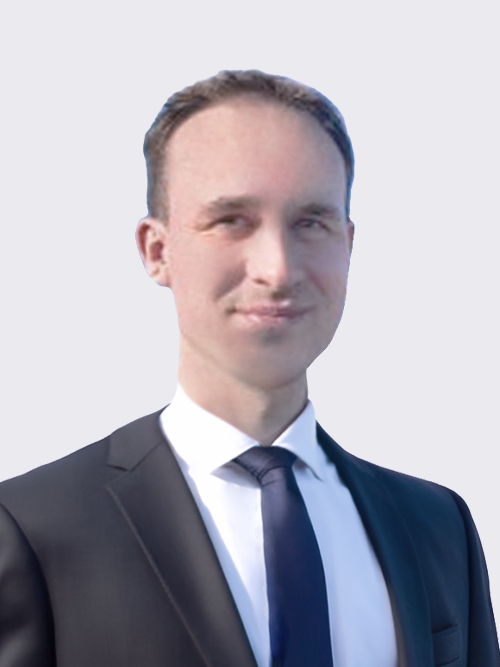
Jens
Senior Mathematics and Computer Science Instructor / Gold Medal Competition and Elite University Mentor- •Bachelor's degree in Mathematics from the University of California, Berkeley (with High Honors), Master's and Ph.D. degrees in Mathematics from UBC
- •Served as the lead instructor for undergraduate courses at UBC (teaching freshman and junior-level calculus and probability courses) and as a teaching assistant; Long-term tutoring in mathematics, physics, and computer science for middle school to university students
- •SSAT/SAT Math, AP, IB, and various academic competition tutoring (AMC, Putnam Competition, etc.); stochastic processes, statistical modeling, algorithm analysis, numerical computation, and multi-language programming (Java, Python, R)
- •Scored 2320 on the SAT (out of 2400); specializes in jump processes and mixing times of Markov chains, having published multiple academic papers in international research projects on jump processes, Harnack inequalities, and heat kernel estimates; coordinated the PIMS-CRM International Graduate Summer School, and previously worked as a Software Development Engineer at Amazon designing machine learning models.
Mr. Jens holds a Ph.D. and a Master's degree in Mathematics from UBC, as well as a Bachelor's degree in Mathematics from the University of California, Berkeley (with High Honors). He achieved an outstanding score of 2320 out of 2400 on the SAT, giving him a profound understanding of the test design and preparation strategies for standardized exams. He also has a solid theoretical foundation in mathematics, specializing in jump processes and the mixing times of Markov chains. Through his research, he has accumulated extensive experience in stochastic processes, statistical modeling, algorithm analysis, and numerical computation. Additionally, he is proficient in programming languages such as Java, Python, and R, enabling him to explain complex and abstract mathematical concepts in an organized manner, providing solid academic support for science teaching from middle school to the university level. In terms of teaching, Mr. Jens has extensive experience in university lecturing and tutoring. He served as the lead instructor for undergraduate courses at UBC, teaching freshman and junior-level calculus and probability courses, and worked as a teaching assistant, tutoring students in calculus, probability, statistics, data analysis, and Python programming. He has long provided tutoring in mathematics, physics, and computer science for middle school and university students, including SSAT Math, SAT Math, AP, IB, and various academic competition training (such as AMC, Putnam Competition, etc.). He can develop personalized study plans based on students' foundations and learning goals, focusing on cultivating logical thinking, problem analysis, and independent exploration skills, enabling students to understand the underlying principles rather than merely memorizing formulas or theorems. Furthermore, Mr. Jens has accumulated outstanding organizational and leadership experience in academic research and international projects. He coordinated the PIMS-CRM International Graduate Summer School, responsible for course scheduling and academic exchanges. During his time as a Software Development Engineer at Amazon, he independently completed the design and implementation of machine learning models, analyzed complex data, and optimized technical processes. At the same time, he published multiple academic papers in research projects, covering jump processes, Harnack inequalities, and heat kernel estimates, demonstrating solid research capabilities and high-level logical analysis skills. These experiences have not only enhanced his systematic thinking and analytical abilities but also provided a solid foundation for him to impart complex knowledge to students in a clear and understandable way. Mr. Jens's teaching philosophy emphasizes deep understanding and independent thinking. He focuses on helping students build a complete knowledge system through clear mathematical structures and logical reasoning, rather than relying on rote memorization of formulas or isolated facts. He is good at guiding students to discover and ask questions, cultivating their ability to solve problems independently and scientific thinking methods through a step-by-step approach, enabling students to respond flexibly and analyze independently when facing competitions, exams, or complex academic problems. At the same time, Mr. Jens values classroom interaction and student experience, creating a friendly, open, and question-encouraging learning environment. He stimulates students' interest through humor and practical cases, allowing them to master knowledge in a relaxed atmosphere. His courses not only help students achieve excellent results in their studies and competitions but also cultivate a long-term interest and deep understanding of mathematics, physics, and related sciences, enabling students to not only learn test-taking skills but also build solid subject literacy and logical thinking abilities.
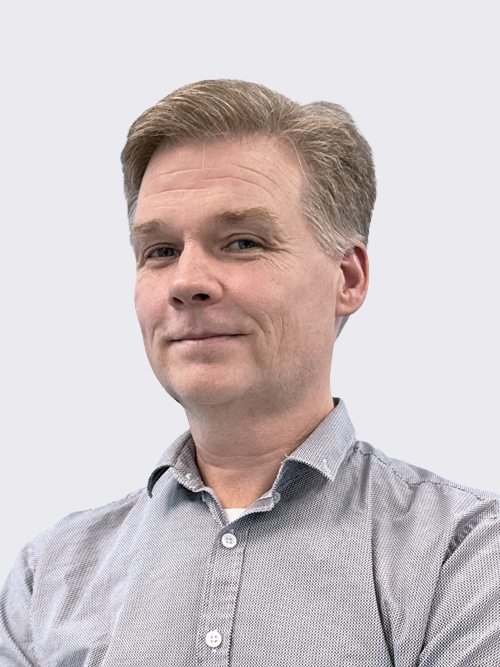
Michael
Senior Physics and Mathematics Instructor- •Ph.D. and Master's degrees in Physics from the University of Toronto, and a Double Honours Bachelor of Science degree in Physics and Mathematics from the University of Waterloo
- •Over 20 years of teaching and tutoring experience at universities and high schools; formerly taught at the University of Copenhagen and served as a visiting professor at the California Institute of Technology (Caltech), mentoring numerous master's and doctoral students; long-term focus on tutoring for SSAT/SAT Math, AP/IB Math and Physics, various academic competitions, and introductory university courses
- •SSAT/SAT Math, AP Math and Physics, IB Math and Physics, international academic science competitions; mathematical modeling, abstract analysis, and university advanced placement and introductory math and physics courses
- •Holds a Ph.D. in Physics from the University of Toronto and an Honors double degree in Physics and Mathematics from the University of Waterloo; previously served on the faculty at the University of Copenhagen and was invited as a Visiting Professor at the California Institute of Technology (Caltech), mentoring numerous master's and Ph.D. students; has served as a keynote speaker at numerous prestigious universities, international physics summer schools, and top-tier academic conferences worldwide; brings over 20 years of hands-on teaching and top-tier research experience, having successfully helped numerous students achieve outstanding results in international science competitions and standardized tests.
Mr. Michael holds a Ph.D. and a Master's degree in Physics from the University of Toronto, as well as a Double Honours Bachelor of Science degree in Physics and Mathematics from the University of Waterloo, providing him with an extremely solid theoretical foundation in physics and mathematics. He has received systematic and rigorous scientific research training, excelling in mathematical modeling and abstract analysis. He can explain complex physics and mathematics concepts in a profound yet accessible manner, starting from fundamental principles, providing solid academic support for science teaching from middle school to the university level. In terms of teaching, Mr. Michael has over 20 years of experience in teaching and tutoring at universities and high schools. He has been engaged in physics and mathematics teaching for a long time, covering SSAT Math, SAT Math, AP and ACT Math and Physics, IB Math and Physics, various academic competitions, as well as university advanced placement and introductory undergraduate courses. He has taught at the University of Copenhagen and served as a visiting professor at the California Institute of Technology (Caltech), mentoring numerous master's and doctoral students. He is familiar with the cognitive characteristics and common learning difficulties of students at different learning stages and can flexibly adjust the depth and pace of teaching according to students' foundations. Mr. Michael's classes emphasize conceptual understanding and logical deduction. He focuses on helping students build a systematic and complete knowledge framework through clear mathematical structures and physical intuition, rather than relying on the mechanical memorization of formulas. He is good at guiding students to understand the ideological logic behind physical laws and mathematical methods, cultivating rigorous reasoning, problem-decomposition, and comprehensive analysis skills, enabling students to possess stable and transferable problem-solving abilities when facing high-difficulty exam and competition questions. In addition, Mr. Michael has extensive experience in teaching and public speaking in the international academic community. He has been invited to serve as a keynote speaker at many well-known universities, international physics summer schools, and academic conferences worldwide. He possesses excellent classroom expression and teaching guidance skills. He can transform advanced academic content into clear, well-structured, and easy-to-understand teaching language, helping students significantly improve their academic performance while building a long-term interest and deep understanding of physics and mathematics.
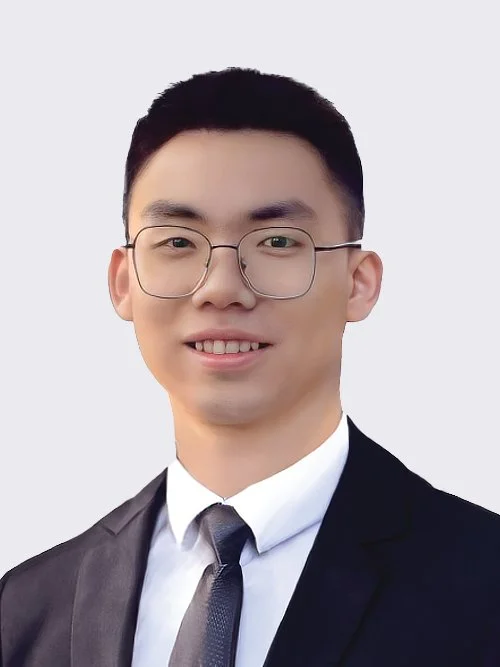
Aaron
Senior Economics Lecturer / Elite International Economics Mentor- •Master's Degree in Economics, University of Toronto; Bachelor's Degree in Economics, Simon Fraser University (SFU) (Ranked in the top 2% of the Economics Department during undergraduate studies)
- •Former Teaching Assistant in the Department of Economics at the University of Toronto, providing instructional support for advanced macroeconomics, microeconomics, and econometrics; years of tutoring experience in high school, AP, and IB economics, and university preparatory courses.
- •High school, AP, and IB Economics, as well as university preparatory courses; labor economic behavior, public economic policy, game theory models, and econometric data analysis
- •Has twice won major academic awards, including the Bank of Canada Undergraduate Essay Award (one of only two recipients nationwide) and the Outstanding Honors Thesis Award from the Department of Economics at Simon Fraser University; ranked in the top 2% of the Economics Department during undergraduate studies; possesses extensive experience as a university teaching assistant and has successfully guided numerous students to achieve high scores in AP and IB Economics exams as well as outstanding school grades.
Aaron holds a Master's degree in Economics from the University of Toronto and a Bachelor's degree in Economics from Simon Fraser University, where he ranked in the top 2% of his department during his undergraduate studies. During his time at university, he was honored with two major academic awards, including the Bank of Canada Undergraduate Essay Award (one of only two recipients nationwide) and the Outstanding Honours Thesis Award from the Simon Fraser University Department of Economics. These accolades fully demonstrate his exceptional abilities and rigorous approach to academic research. In his research, Aaron actively participates in various cutting-edge projects covering labor economics, public economic policy, and game theory models, showcasing his outstanding skills in theoretical modeling and data analysis. Additionally, he served as a Teaching Assistant in the Department of Economics at the University of Toronto for multiple semesters, providing course support, grading exams, explaining assignments, and answering questions. He also led tutorial sessions on advanced macroeconomics, microeconomics, and econometrics, reflecting his solid professional foundation and extensive teaching experience. With a profound academic background and rich practical experience, Aaron has accumulated years of teaching experience in economics, focusing on high school, AP, and IB economics, as well as university preparatory courses. Over the years, he has successfully guided numerous students in improving their school grades and passing their AP and IB exams. Aaron has a deep understanding of the knowledge structure and grading criteria of international curricula. He can tailor teaching plans to students' specific needs, helping them efficiently improve their academic performance. Aaron adheres to the philosophy of "understanding over memorization, and logic over rote learning," emphasizing the systematic nature and practical application of knowledge. He deeply understands that each student has a unique learning pace and thinking style. He patiently guides students and flexibly adjusts the teaching pace, consolidating their foundation while gradually building their academic confidence and independent learning skills. Aaron firmly believes that economics is not only a tool for analyzing social phenomena but also a vital way to cultivate rational thinking and critical judgment. Leveraging his professional background and extensive experience, he is committed to providing students with high-quality academic support and personalized tutoring, helping them break through at every stage of their academic journey and step towards a broader future.
Student Testimonials
Hear Their Success Stories
When I started preparing for the GRE, the Verbal section was my biggest weakness. Through targeted training in vocabulary, reading, and text completion, combined with periodic practice tests to continuously adjust my study focus, my GRE score ultimately improved to 334.

The instructor helped me identify weak question types based on my performance in each mock exam. Since Quantitative was already my strength, we focused on improving my Reading and Text Completion skills, and I eventually achieved my target score.

I received focused training on my weak areas in the Verbal section, particularly vocabulary, text logic, and reading comprehension. By reviewing my mistakes and practicing regularly, I became more accurate and improved my pacing.


Outstanding Results
Admissions to Leading Universities
85% of our students have received admission offers from top 30 U.S. universities, including Harvard, MIT, and Stanford.
Average Score Improvement
Our students improve their GRE scores by an average of 30+ points, with some gaining up to 50 points and many scoring above 330.
Student Satisfaction
98% of students would recommend our GRE program.
Take the Next Step Toward Your GRE Goals
Contact us to receive your free GRE prep package.
Limited-Time Offers
- 10% off for the first 50 students to enroll
- Free GRE prep package (valued at $150)
- Free GRE practice test and performance assessment
Offer ends: December 31, 2026