
Prepare for Private School Admission
Experienced Teachers · Personalized Learning Plans · Structured SSAT Curriculum
Build the academic skills and test-taking strategies needed for SSAT success.
Latest Articles
SSAT preparation guides, test-taking strategies, and private school admissions insights.
How to Prepare for SSAT Writing: It Is Unscored, but Schools Treat It as the Most Authentic Writing Sample
Based on the SSAT official website's (admission.org) guidelines, this guide explains why the SSAT writing sample is important, how the Middle and Upper Level writing sections are administered, the style of official practice prompts, the five aspects schools evaluate in writing, how scores and writing samples are sent together, how to allocate the 25 minutes, how to write argumentative and narrative essays, and how test-takers in mainland China on the paper-based test can practice handwriting.
How to Practice for SSAT Math: Concepts Are Straightforward, but English Word Problems, Manual Calculations, and Uncommon Question Types Are Challenging
Based on the SSAT official website's (admission.org) description of the Upper Level Math section and the math practice materials, this guide explains what the two sections totaling 50 questions (no calculators allowed) cover, the 30+ concepts and key tips listed on the website, the four areas where Chinese students often lose points (English word problems, uncommon question types like nets and Venn diagrams, manual calculations, and answering the wrong question), the seven official math strategies, and a practice schedule.
How to Practice for SSAT Reading: Official Tips and Examples for the Five Question Types, Practiced One Category at a Time
Based on the SSAT official website's (admission.org) description of the Upper Level Reading section and the reading practice materials, this guide explains what the 40-question, 40-minute reading test with 250–350 words per passage covers, official tips and example rationales for the five question types: Main Idea, Details and Structure, Inference, Author's Intent, and Language Use, the six official reading strategies, and how to read poetry and literary excerpts, as well as how to build vocabulary for tone and literary terms.
How to Memorize SSAT Vocabulary: Think Before Checking the Translation, Use Spaced Repetition, and Master Analogies with Bridge Sentences
The SSAT Vocabulary section has 60 questions in 30 minutes; synonyms test word recognition, while analogies test relationships. Simply memorizing a vocabulary book only solves half the problem. Drawing on psychological research, this article explains why repeatedly reading word lists is inefficient, provides a concrete approach using flashcards, self-testing, and spaced repetition, and introduces the officially recommended bridge sentence method for analogies.
How to Score High on the SSAT: Understand Percentiles First, Then Master Guessing and Vocabulary
SSAT percentiles are based only on same-grade, first-time test takers in the US and Canada—a group already preparing to apply to private schools. This article follows the official score interpretation guide to explain how to read your scores, calculates when it makes sense to guess under the wrong-answer penalty, and breaks down how to practice for the Vocabulary, Reading, Math, and Writing sections step by step.
The Complete Guide to the SSAT Upper Level: All the Rules 8th–11th Graders Need to Know When Applying to High School
The SSAT Upper Level is designed for students in grades 8–11 and is the most common test tier for applying to US private high schools. It lasts 3 hours and 10 minutes, features 60 Vocabulary questions in 30 minutes, and deducts 1/4 of a point for each wrong answer. We also explain why the official guidebook cannot calculate an exact score.
About the SSAT
The SSAT (Secondary School Admission Test) is the admissions test for U.S. secondary schools and a key factor in admissions at many of North America's top private schools
What the Test Covers
Four sections (verbal, quantitative, reading comprehension and writing) that assess a student's academic and language skills
Test Levels
Three levels for different ages: Elementary (grades 3-4), Middle (grades 5-7) and Upper (grades 8-11)
Why It Matters
A strong SSAT score opens the door to top U.S. private schools and directly affects admissions decisions
Why Choose Us
What Sets Our SSAT Program Apart
Experienced Teachers
Our SSAT teachers each have over five years of teaching experience.
Personalized Instruction
Study plans tailored to each student's learning needs and current level.
Full-Length Practice Tests
Regular practice tests to build familiarity with the exam format and improve time management.
Vocabulary Development
Targeted vocabulary practice to strengthen verbal reasoning skills.
Reading Comprehension
Structured reading practice to improve reading speed and comprehension.
Progress Monitoring
Regular progress reviews and support throughout the course.
Our SSAT Programs
Choose the Right SSAT Course for You

SSAT Foundation Course
Intro12 weeks / 48 hours
- Comprehensive introduction to SSAT question types
- Core vocabulary building
- Review of key math concepts
- Introduction to reading strategies
- Weekly practice tests
SSAT Intensive Course
Advanced10 weeks / 40 hours
- Mastering high-frequency vocabulary
- Targeted practice with challenging math problems
- Faster reading and better comprehension
- Developing ideas for the writing sample
- In-depth review of authentic SSAT questions

SSAT Final Prep Course
Exam Ready6 weeks / 30 hours
- Full-length practice tests
- Test-taking strategy drills
- Reviewing and learning from mistakes
- Building test-day confidence
- Final exam preparation
Custom 1-on-1 Course
A fully customized teaching plan built around each student's needs, with flexible scheduling and content
Our Teaching Team
Meet the teachers who help students build the skills and strategies needed for SSAT success.

Vahid
Chief English InstructorMaster's Degree in English Teaching
Over 13 years of teaching experience at overseas universities and private schools in Canada and beyond
Various ESL courses, Canadian language proficiency levels, CEFR, curriculum development, EAP, essay evaluation, and course development and teaching for SSAT, SAT, IB, IELTS, TOEFL, GRE, CELPIP, and other exams
Achieved a perfect score of 9 (out of 9) multiple times in the reading, listening, and speaking sections of the IELTS; former journal editor who published research on the relationship between spatial intelligence and cloze test performance in the 2012 edition of the Journal of English Teaching (EFL)
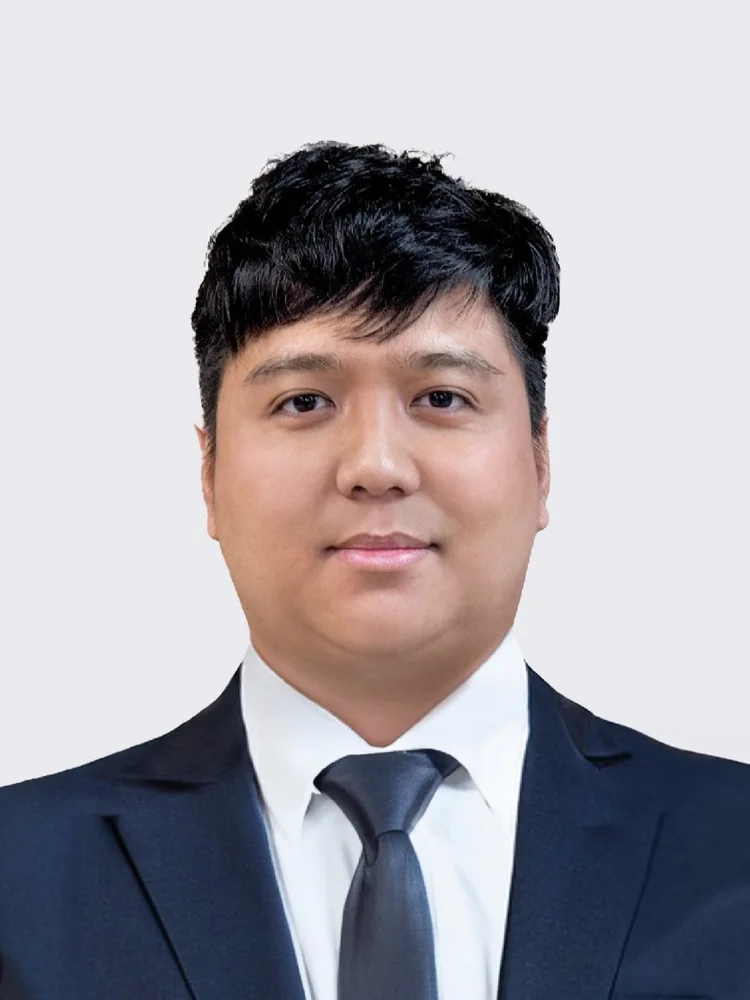
Gabriel
Senior English InstructorB.A. in English Literature and minor in English Language from the University of British Columbia, holding an international TESOL certification
Years of tutoring experience in K-12 English Literature, ELL, SAT, SSAT, AP, and university application essays
K-12 English Literature, ELL, SAT, SSAT, AP, and university application essays; proficient in key concepts and challenging topics in English Literature, linguistics, grammar, writing, short stories, drama, and poetry across all grade levels, with expertise in literary appreciation and in-depth thematic analysis of texts
Helped hundreds of students achieve significant score improvements in school English Literature classes and standardized tests
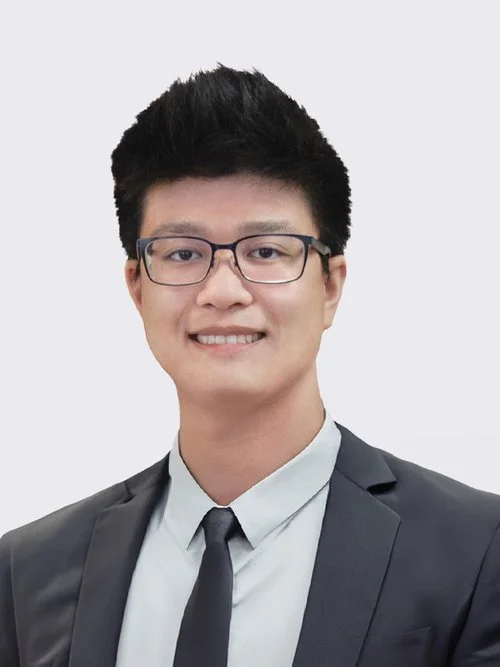
Edison
Senior Science InstructorJoint Honours Bachelor of Science in Biochemistry and Forensic Science from UBC
Served as a teaching assistant for multiple university courses and an extracurricular tutor for university peers, with extensive tutoring experience in K-12, AP, and SAT level Science and Mathematics
Biology, Chemistry, Mathematics, and Physics for K-12, AP, and SAT levels; proficient in all mainstream Science and Mathematics subjects, with a strong background in coaching for competitions (AMC, COMC, Physics Olympiad, etc.) and scientific research
Achieved perfect scores of 5 in AP Biology, Chemistry, Calculus AB/BC, Physics 1 and 2, Statistics, Literature, and Psychology during high school; consistently achieved outstanding results in various competitions such as the Gauss, Pascal, and Fermat math contests, COMC, AMC 10/12, and Science and Physics Olympiads; nominated for the Best TA Science Student Recognition Award for outstanding teaching performance during university.
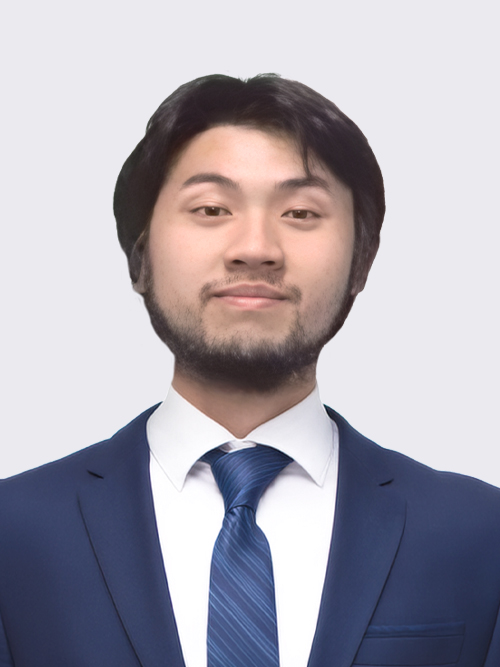
Haggai
Senior Instructor in Mathematics and Computer SciencePh.D. and Master's degrees in Mathematics from SFU, along with a double major in Mathematics and Computer Science at the undergraduate level (graduated with straight A+s and awarded Distinction; achieved a Ph.D. GPA of 4.24/4.33)
Long-term Teaching Assistant in the SFU Mathematics Department since 2018, tutoring multiple core university math courses; served as the independent instructor for SFU's Advanced Calculus III in 2025; brings extensive teaching and tutoring experience covering K-12, AP (Calculus, Statistics, Computer Science, Physics), and all university levels
Combinatorics, algebraic geometry, topology, number theory, and group theory; international algorithm competitions and programming (dynamic programming, graph theory, data structures, etc.); K-12 math, AP sciences and computer science, and advanced university-level math
Graduated with straight A+ grades and Distinction honors; achieved a Ph.D. GPA of 4.24/4.33; published multiple papers in international mathematics journals, invited to present at Canadian and international mathematics conferences, and participated in cutting-edge research projects at the Banff International Research Station (BIRS) in Canada; achieved outstanding results on international algorithm competition platforms, demonstrating a strong background in both research and practical application
What Sets Our Teachers Apart
Student Testimonials
Hear What They Have to Say
"Before I started preparing, I lacked confidence in the Verbal and Reading sections. My teacher helped me reorganize my vocabulary and reading strategies, and we did a lot of targeted practice on my weak question types. In the end, my SSAT score improved significantly from my initial practice tests, and I successfully got admitted to my dream school."
"The instructor adjusted the focus based on the results of each practice session instead of just repeating drills. Since Quantitative was my strength, I spent more time on Verbal and Reading in the later stages, making the entire preparation process highly targeted."
"Besides SSAT prep, my counselor also helped me understand the focus areas for my applications and interviews. Having a clear roadmap for each stage made the entire application process much less stressful than I initially expected."
"Initially, my vocabulary was relatively weak, and the Verbal section was my least confident area. After systematic vocabulary and question-type training, my speed and accuracy improved significantly."
"Reading was always the section where I lost the most points. After my teacher guided me through analyzing different passages and question types, I gradually found a reading pace that worked for me, and my mock exam scores became much more consistent."
"The final sprint phase focused mainly on timed mock exams, mistake analysis, and strengthening weak areas. My teacher adjusted the focus for subsequent sessions based on each mock exam's results, which greatly boosted my study efficiency in the last few weeks."
Start Your SSAT Prep Journey
Get a free consultation with our expert advisors to create a personalized SSAT study plan.
Limited-Time Offers
- 10% off for the first 50 students to enroll
- Free SSAT Mock Test (Value: $295)
- Free complete set of SSAT prep materials
Offer ends: December 31, 2026